How to spot a material staging yard before a job site breaks ground
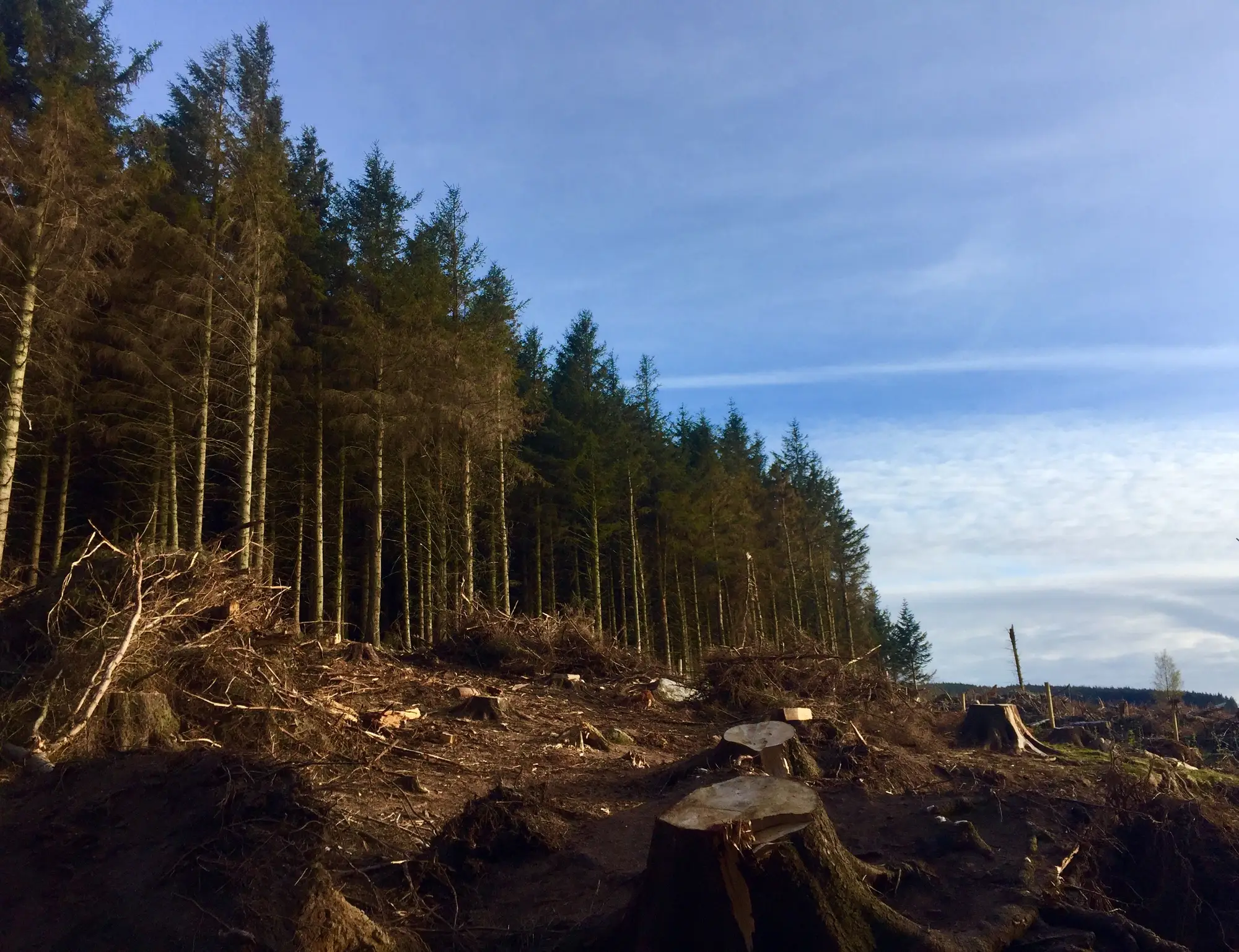
A staging yard doesn't show up on a parcel overnight. It shows up in pieces, and most of those pieces get laid down before anyone pulls a permit the county will post publicly. If you supply aggregate, lumber, rebar, or precast to GCs in your territory, the parcels you should be watching aren't the ones with a sign out front. They're the ones where something small and boring just changed.
What changes first
Before a laydown area gets gravel or crane mats, the site usually goes through a quiet sequence that has nothing to do with vertical construction yet.
First, the tree line gets ragged, thinned along the sightlines a survey crew or site-clearing sub needs rather than clear-cut outright. A few trees come down along what will become an access road while the rest stay standing. From the road it could pass for storm damage or a utility trim. It's the start of deliberate clearing instead.
Second, fencing goes up. Temporary chain-link or orange construction fence, sometimes just T-posts and silt fence if the parcel is still in grading permit limbo. This fence line almost never matches the parcel boundary on the assessor's map. It matches the staging footprint plus laydown, which is usually smaller than the full parcel.
Third, and this is the tell most people miss: an access track gets cut before there's a road. Compacted gravel, sometimes just graded dirt, running from the public road back to where the staging area will sit. Developers put this in early because they need to get equipment and material onto the site before they need to get concrete trucks onto it. If you see fresh gravel cutting across a field that had none six weeks ago, that's not a farmer's driveway repair. That's a contractor staging for mobilization.
Why the sequence matters more than any single sign
Any one of these on its own could be nothing. Somebody clears brush for a lot of reasons. Fence goes up around vacant land all the time. But when you get the clearing, then the fence, then the access track, in that order, on a parcel that's been sitting idle, that's a developer who's already committed money. Nobody cuts a gravel access road on spec. That's a four-figure line item a developer only spends once the deal is locked and the GC has a mobilization date.
This is the window that matters for a sales manager. A permit filing is the end of that process, not the start of it. By the time the grading permit or building permit shows up in the county system, the GC has already priced their concrete and masonry package, and in a lot of cases they've already got a supplier lined up. If you're calling after the permit posts, you're calling into a filled slot. If you're watching for the clearing-fence-track sequence, you're calling three to six months earlier, while the bid package is still being assembled.
Reading the staging area itself
Once the footprint is cut, what gets laid down tells you what's coming. A gravel pad with crane mats and container storage usually means vertical steel or precast is on the way soon. A staging yard that's mostly just fenced open ground with a few conex boxes often means the GC is still waiting on utility relocates or final civil approval, so there's more runway before material orders start. Stacked silt fence rolls and erosion control supply usually mean grading is imminent, which means your window to get a quote in front of the GC's buyer is now, not next month.
None of this requires walking the site. A regional sales manager with forty parcels in a territory can't drive every one of them every week, and county GIS updates on its own schedule, usually well behind what's happening on the ground. That's the gap between a clearing crew showing up in September and a permit posting in February.
That gap is the whole reason Land Clearing Alerts exists: a weekly read on which watched parcels got a fresh access cut, new fencing, or stripped vegetation, so you know a site went active before the paperwork catches up.
If you're tired of finding out about a job after the concrete order already went to a competitor, that gap is worth closing.