Site clearing vs. storm damage: reading the difference in satellite imagery
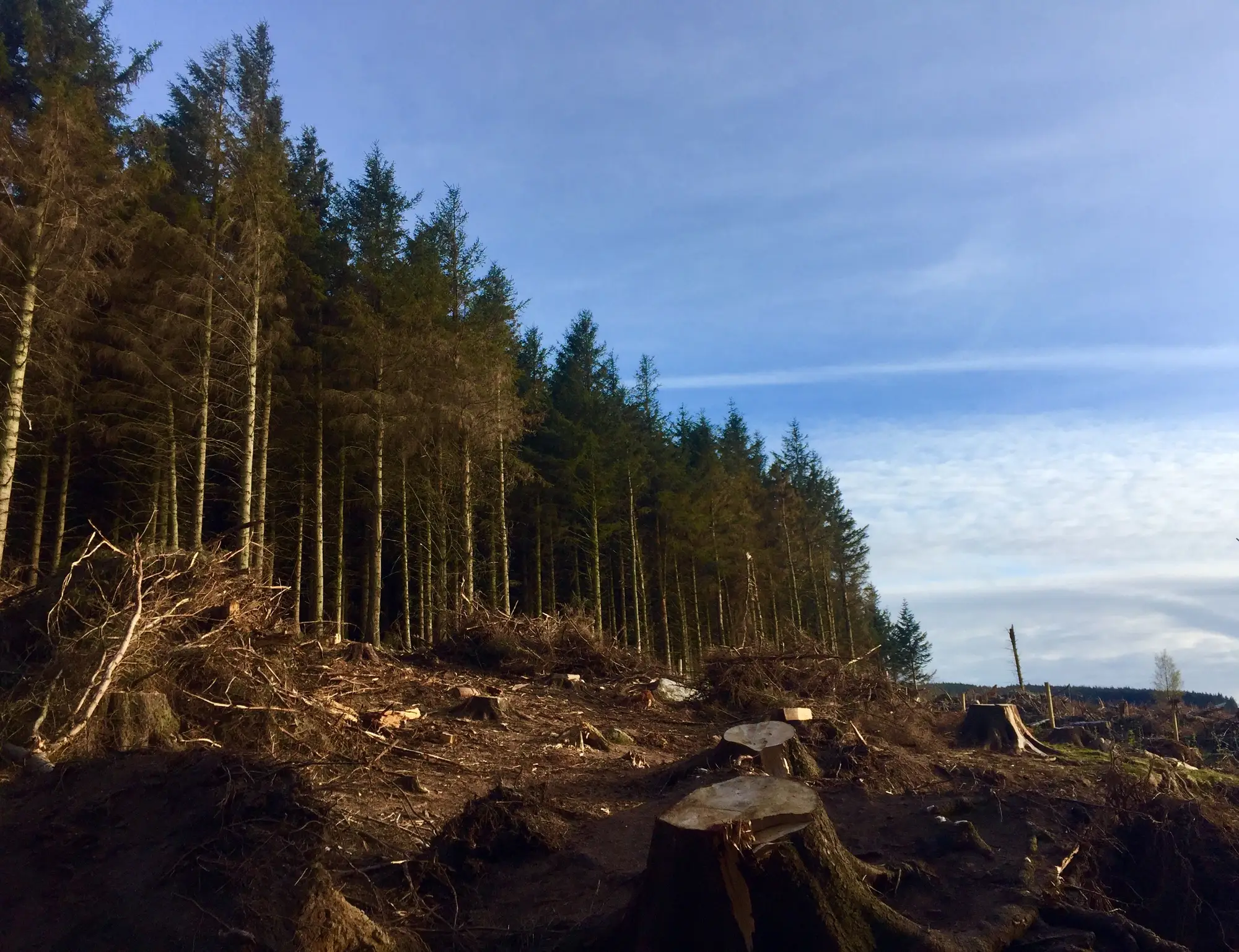
A parcel that was full tree canopy last month shows bare ground this month. Before you call it a committed site and start working the phone, you need to know whether a crew cleared it or a storm did.
Both look like "trees gone" from altitude. They don't look the same up close, and the difference matters to your lead sheet. Windfall is noise. A cleared parcel with a straight access cut running to the road frontage is a developer who has already spent money.
Edge shape is the first tell
Man-made clearing has a boundary. Crews clear to a property line, a setback, or a pad footprint, so the tree line goes from full canopy to bare ground in a straight run, sometimes with a slight stairstep where a dozer worked in passes. Look at the corners. A cleared site has corners, because somebody surveyed it.
Wind damage doesn't respect a property line. A microburst or a straight-line wind event flattens a swath that follows the storm track, not a parcel boundary. The edge is ragged, it bleeds across fence lines into the neighboring woodlot, and it tapers out rather than stopping dead. If the bare patch crosses onto land nobody's filed anything on, that's your answer right there.
Canopy gaps from disease or selective logging can also fool a quick look. Those tend to be patchy and scattered rather than one contiguous footprint, so if you're seeing holes instead of a cleared block, it's probably neither of the two you're weighing.
Stump pattern, debris, and what's missing
This is the detail that settles it when the edge shape is ambiguous.
Cleared sites show cut stumps and piled debris, usually windrowed along one edge or burned in a pile, because clearing a site for construction means getting the wood out of the way. You'll often see a staging area, a gravel pad, or parked equipment show up in the same pass or the next one.
Windfall leaves root wads. Trees go over at the base, pulling a disc of soil and roots up with them, and the trunks lie in a rough alignment because they all went down in the same gust direction. There's no pile, no stump, and no equipment. The downed timber just sits where it fell, scattered across the understory rather than cleared off it.
Access is the other giveaway. A developer cuts a track in before clearing the rest of the site, because trucks and equipment need a way to get to the work. If you see a fresh cut running from the road to the bare patch, with grading visible along it, that's site prep. Storms don't build roads.
Cross-check against the calendar
If a straight-edged bare patch with debris piles showed up the same week a wind advisory or severe thunderstorm warning hit your county, slow down. Pull a regional storm report before you log it as a lead. Conversely, a cleared parcel with a fresh access cut that shows up on a calm week with no weather event anywhere nearby is almost certainly a crew, not a gust front.
Acreage shape helps too. Windfall tends to follow a storm track, long and narrow, oriented with the wind. Cleared acreage tends to match a parcel boundary or a pad footprint, square or rectangular, oriented with the property lines on record. If the cleared shape on your screen matches the plat shape for that tax lot, that's not a coincidence.
None of this is reliable off a single pass. A parcel can look cleared in one image and turn out to be a partial blowdown that a landowner finished bucking up over the following weeks, or the reverse. What actually separates the two is watching the same ground change over consecutive weeks: did the bare patch grow along straight lines with equipment showing up, or did it sit static with no access cut and no pile?
That's the gap a weekly parcel-alert feed is built to close on your watch list, flagging vegetation stripping, access cuts, and fencing on the parcels you're already tracking so you're not guessing from one satellite pass. If you've got a list of parcels you'd commit a quote to the moment you saw real clearing, that's worth putting on a weekly watch.