Temporary construction fencing vs permanent farm fencing in satellite imagery
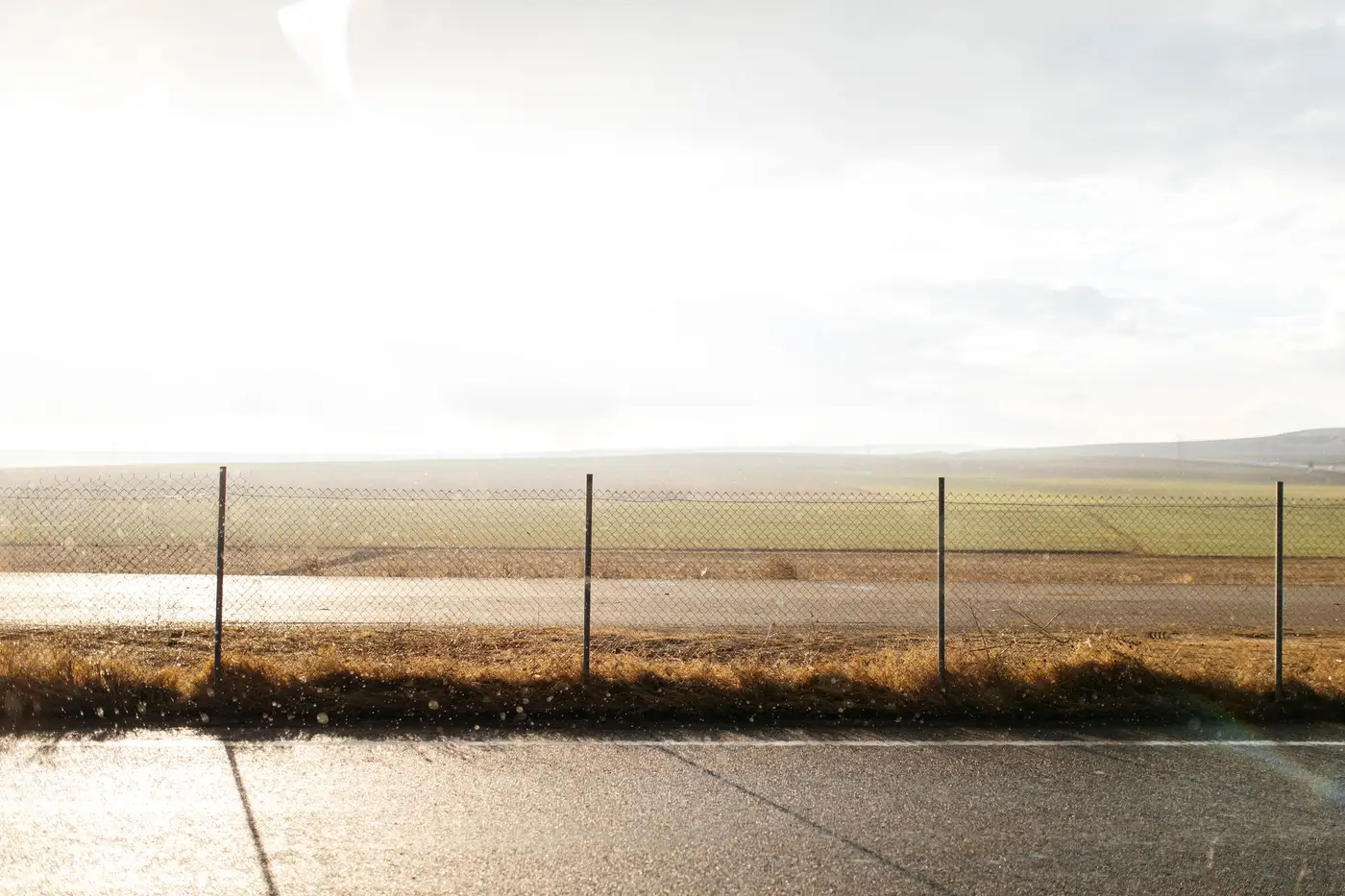
Pull up an aerial pass on a parcel you're tracking and nine times out of ten there's a fence line somewhere on it. Some of those fences have been there since before the parcel was platted. Others went up three weeks ago when a GC mobilized. Mixing the two up costs you real time: chase the wrong one and you burn weeks on a parcel that isn't moving, while the one that's actually being staged for development sits unwatched.
Chain-link and silt fence read as straight new cuts
Temporary construction fencing, the kind a GC puts up before grading starts, almost always shows up as a tight, geometric perimeter. It traces the exact footprint of the pad or the laydown yard, not the parcel boundary. Look for corners that are too square to be a property line, and for a fence that cuts across what used to be open field or tree cover rather than following it. Silt fence and orange construction mesh read even brighter than chain-link in most passes, since the material reflects more light. A thin bright line that wasn't there on last month's pass, and doesn't follow the recorded parcel edge, is your tell.
Farm and property fencing follows the land, not the job
Permanent ag or property fencing does the opposite. It tracks the actual boundary, which means it bends around a creek, runs along an old stone wall, or follows a line surveyed and recorded decades ago. It also tends to read lower-contrast in imagery, because wire and wood weather and pick up dirt and lichen over the years, where new fence material still has that factory sheen. If the line matches the parcel boundary you already pulled from the county record, it's almost certainly the property fence and not a site security install.
Other tells that confirm which one you're looking at
Fencing alone isn't enough to call it. Pair it with what's happening around it. A construction fence usually shows up with a new gravel or dirt access cut running to the nearest road, wider than a farm gate needs. Just inside the fence line, you'll often see a cleared staging area where equipment or materials get dropped before anything else happens on site. A permanent fence just sits there, grass or crop right up against both sides, no new cut anywhere near it.
Timing matters too. If the fence line appeared on this week's pass and wasn't there two or three passes back, treat it as new no matter how it looks. An old farm fence doesn't suddenly appear. A construction perimeter does, and it's usually one of the first physical moves a developer makes on a site, well ahead of the grading permit showing up in the county system.
Why this is worth sorting out before the permit posts
By the time a permit filing shows up in public record, the site's already been walked, staged, and in some cases the GC has started pulling bids. A fence line that reads as new construction fencing, paired with a fresh access cut, is one of the earliest signals you can get off an aerial pass that someone has put money behind that parcel. Sort the fence types correctly and you catch that signal before every other materials rep in your territory does.
Checking fence geometry pass over pass is manageable when you're watching a short list of parcels by eye. Once you're tracking more than a handful across a territory, that's a lot of imagery to compare by hand every week. Land Clearing Alerts runs that comparison on your watched parcels and flags the ones where the fence line, the access track, or the clearing changed since the last pass.
Put the parcels you're tracking on that list and let the fence-line read get done for you.